
NVQ Level 3 Electrical and Electrician Courses: A Practical Route to Competence
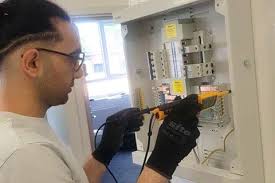
If you want a path that leads to real site confidence, begin with structured electrician courses and, once your on-the-tools experience is ready to be measured, progress to the industry benchmark nvq level 3 electrical qualification. Elec Training keeps this journey clear and practical, focusing on repeatable methods, tidy documentation, and safe habits that stand up to audit. Many learners also use Elec Training Birmingham for timetable flexibility while they build evidence on live jobs.
Why a planned route matters
Electricity rewards precision, it punishes guesswork. A planned route through foundational electrician courses into nvq level 3 electrical turns knowledge into muscle memory. You get the theory you will actually use, plus supervised workshop time that builds speed without cutting corners. This balance reduces call backs, helps you spot compliance implications early, and gives employers confidence that you can deliver under time pressure.
What strong electrician courses should deliver
Quality courses go beyond formulas. Early modules make you fluent in voltage, current, resistance, and power, then apply those ideas to daily decisions, cable sizing, protective device selection, and safe isolation. You practise reading and red-lining drawings, planning containment that remains serviceable, and recording your work so another electrician can understand it in minutes. Workshops should be hands-on: conduit bending, trunking and tray set out, cable dressing with consistent fixings, and distribution board assembly that respects coordination and maintenance access core skills for a competent domestic installer.
Tutors ask why a number makes sense, not only whether it matches a guide. That question builds judgement.
How nvq level 3 electrical turns learning into recognised competence
The nvq level 3 electrical qualification is a competence assessment based on real work, not a classroom quiz. You compile a portfolio from genuine jobs showing that you can plan, install, test, and document to standard. Assessors look for clean workmanship, sensible sequencing, and paperwork that is internally consistent. For many employers and main contractors, nvq level 3 electrical is the point where experience becomes a portable credential.
Building an evidence habit from day one
There is many reasons to capture evidence early, the main one is that it saves days later. Start simple and keep it consistent.
- Date-stamped photos at key stages: containment before lids, terminations before energising, final boards with legible legends.
- Test sheets that make sense: continuity, insulation resistance, loop impedance, prospective fault current, RCD performance, plus a one-line note on anomalies and the fix you chose.
- Job-specific risk assessments and method statements, with safe isolation recorded clearly.
- As-built drawings or marked-up sketches whenever layouts differ from plan.
- Brief reflections, what problem you faced, why you chose a method, and how you verified the outcome.
This habit proves judgement as well as tool skill. It also makes you the calm person on site when a client asks for records three months later.
The core skills you should expect to make automatic
Design and selection you actually use
Calculate design current, apply installation method, grouping and ambient corrections, and check volt drop before drilling a single hole. Choose protective devices that coordinate, think about discrimination or selectivity where nuisance trips would hurt operations, and plan clear isolation points for maintenance.
Containment and routing with clean workmanship
Lay out conduit, trunking, tray, and basket so routes are accessible and robust. Keep fixings regular, align trunking properly, leave bend radii that respect cable data, and avoid clashes by reading the space before you mark it. Tidy containment shortens testing and reduces call backs.
Terminations and distribution that pass inspection
Prepare conductors properly, torque where the manufacturer requires, and dress cables so inspection is easy years from now. Assemble distribution boards with logical device order and plain-English legends. A tidy board prevents confusion during faults and improves safety.
Testing and commissioning that proves safety
Plan a sequence that avoids energising a fault. Capture continuity, insulation resistance, earth-fault loop impedance, PFC or PSCC, RCD performance, and functional checks in one efficient pass. If a figure looks off, recheck with a different method, find the cause, and document your decision. The paperwork are a safety tool, not an afterthought.
Documentation that protects everyone
Complete certificates and schedules that reconcile with drawings. Keep notes another electrician can follow without guesswork, and file evidence so you can retrieve it in minutes. Good records reduce disputes and speed audits.
Safety and compliance in practice
Competence and safety cannot be separated. Reliable training weaves job-specific risk assessment and method statements into every task. You will practise disciplined safe isolation with lockout and tagout, correct PPE, safe manual handling, and live-work avoidance wherever possible. You also need a working grasp of the wiring rules in context, used as decision filters on site, not just as exam paragraphs. When a design choice has compliance implications, flag it early and design out the risk before it becomes rework or delay. Elec Training tutors will keep asking you to justify choices, because understanding is what carries you through tight deadlines.
Where Elec Training helps most
Elec Training keeps class sizes sensible and workshop time practical, so you spend less time waiting for kit and more time building competence. You can use regional centres to cut travel, and Elec Training Birmingham if city access keeps your week consistent. The approach is the same everywhere, judged practice, straight feedback, and clear expectations for evidence. When you are ready to assemble your nvq level 3 electrical portfolio, the groundwork is already in place.
Training for today’s jobs, not yesterday’s
Clients expect efficient systems, clear records, and straightforward maintenance. Your route through electrician courses and nvq level 3 electrical should introduce the systems you will see most often:
- EV charging at domestic and small commercial scale, supply assessment, load management, correct protection, and clean documentation of decisions.
- Solar PV and battery storage basics, integration with existing distribution, isolation points, earthing considerations, and sensible labelling.
- Smart controls and simple automation, sensors and timers that deliver measurable savings without overcomplicating upkeep.
- Low-energy lighting and emergency systems, practical verification steps, logbooks, and records that speed future inspection.
You do not need to specialise in everything on day one, a working understanding helps you speak your client’s language and positions you for higher value tasks.
A five-point checklist for choosing a provider
Before you invest time and money, audit the basics so you avoid frustration later.
- Instructor pedigree, tutors with current site experience and clear learner outcomes.
- Facilities, enough bays, testers, and consumables for genuine hands-on practice.
- Safety culture, sensible cohort sizes, realistic scenarios, and tidy housekeeping.
- Support, guidance on portfolios, exams, and interviews, plus transparent outcomes data.
- Progression map, a visible route from early electrician courses into nvq level 3 electrical with realistic timelines and employer links.
Centres that are open about these points usually care about results, not only enrolments. Elec Training is built around those checks.
A four-week plan to build momentum
Week 1: set up per-project folders for photos, drawings, and certificates, then book two short practice slots.
Week 2: capture photo sequences on two circuits, annotate one anomaly and your fix, refresh your safe isolation checklist.
Week 3: rehearse your testing sequence end to end, label a board as if handing to another electrician, tighten your time on ring tests and RCD checks.
Week 4: meet an assessor, map gaps to the occupational standard, schedule observed tasks, finalise your evidence list.
Keep it simple and consistent. Consistency is what turns training into safe, repeatable performance.
Ready to turn careful workmanship into documented results that employers trust, enrol on targeted electrician courses to lock in the fundamentals, then plan your nvq level 3 electrical assessment when your day-to-day work already meets the standard. Elec Training will help you turn tidy installs into test-clean outcomes, and you can compare schedules or ask questions through the main site, www.elec.training.
Elec Training supports learners across the region, including those who benefit from the convenience of Elec Training Birmingham for shorter travel and steady workshop access.
Citations
Health and Safety Executive, Electricity at Work Regulations, legal duties and practical precautions. https://www.hse.gov.uk/electricity/index.htm
Institute for Apprenticeships and Technical Education, Installation and Maintenance Electrician, occupational standard and assessment plan. https://www.instituteforapprenticeships.org/apprenticeship-standards/installation-and-maintenance-electrician-v1-0